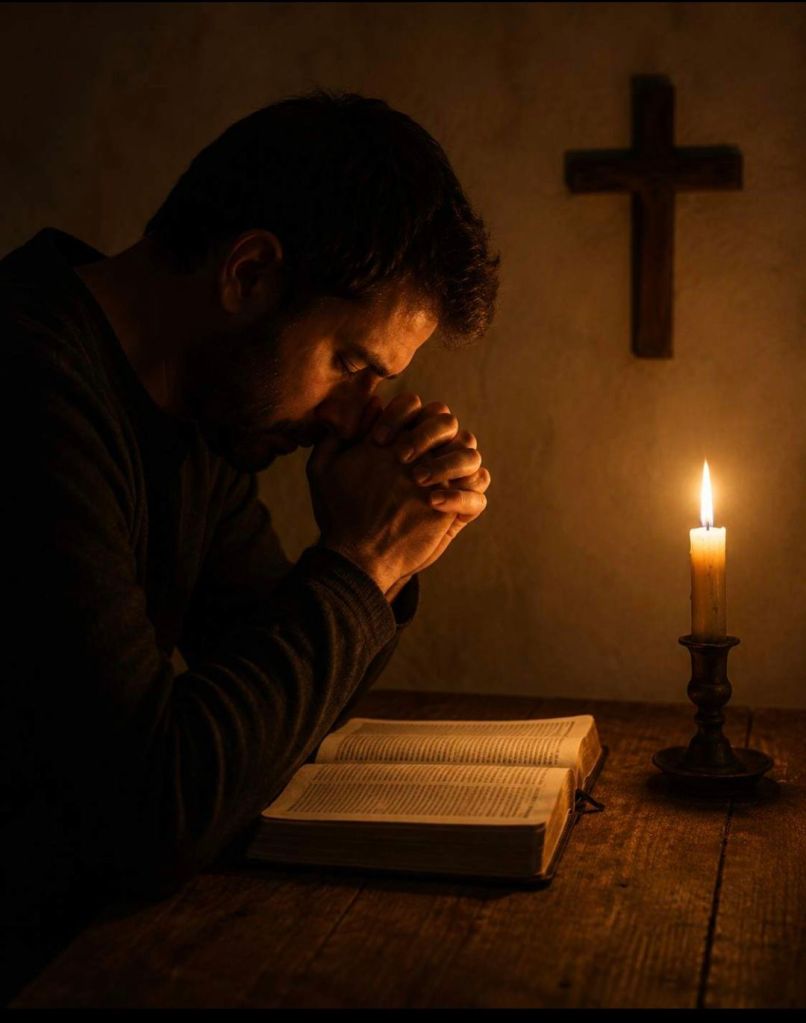
Lectio divina is an ancient Christian practice that dates back to the origins of Christianity and helps deepen faith while leading one more fully into the Ultimate Mystery—God alone—enhancing the mystical path toward the Triune God: Father, Son, and the Holy Spirit.
Lectio divina is Latin and means “divine reading.” It is a simple practice, but that does not mean it is not powerful and profound. Traditionally, it has been practiced in the Catholic Church, but other Christian traditions, such as Protestant churches, also practice it.
Lectio divina is divided into four parts: Lectio (Reading), Meditatio (Meditation), Oratio (Prayer), and Contemplatio (Contemplation). These stages together form a prayerful reading of Scripture, involving reading, meditating, and praying over the text, and ultimately leading into contemplation.
At first, you choose a passage of Scripture on which you would like to practice lectio divina. It can be just one or two sentences, but no longer than a paragraph. For example, I have sometimes used 1 John 4:8: “Whoever does not love does not know God, because God is love.”
I begin lectio divina with reading. I read the verse slowly and mindfully. This can last, for example, couple of minutes, or until I feel calm and focused. It is important to simply read it without judging it or thinking about its deeper meaning. I just read it mindfully and in silence.
After the reading, I move on to meditation, focusing on a shorter sentence, for example “God is love,” or a single word that speaks to me. I think about it slowly in my mind and let myself rest in the sentence or word until I am immersed in it. How does it speak to me? What thoughts does this sentence or word bring to mind? I simply meditate on the thoughts and on the word or words, and how they speak to me.
After reading and meditation, I move on to prayer. I can pray about whatever comes to my mind from the meditation. If the word love has spoken to me, I can ask God for His love and protection for my children. Whatever comes to my mind is okay; I simply let the thoughts arise and pray in my own words. There is no wrong way to pray.
After prayer comes the most important part of lectio divina: contemplation. By now, my mind should be fairly focused and calm, but if it isn’t, that’s okay. Some days are easier, some are harder, so I just need to be gentle with myself. Through reading, meditation, and prayer, I enter into contemplation, where I allow myself to rest beyond words. I let the words go and focus on God’s peace and stillness in complete silence. Whenever my mind starts to wander (and it will), I gently return to silence and let my thoughts go again, simply sitting or lying in stillness, breathing, and allowing myself to be without words or thoughts. At first, contemplation might be difficult, but the more you do it, the easier it becomes.
Some Christians have sometimes criticised lectio divina as being too similar to “Eastern practices” such as Zen meditation or modern transcendental meditation. However, although lectio divina may appear similar on the surface, it is fully rooted in reading Scripture and is a distinctly Christian method for deepening faith and entering into mysticism—understood as knowing the Triune God in a deeper and more profound way. Lectio divina is suitable for everyone.
I encourage every Christian to try it, because you may be surprised by how powerful it is for your mind and, most importantly, for your relationship with God, Jesus Christ, and the Holy Spirit. After all, there are many ways that lead to God’s presence, and lectio divina is one of the great ones if you simply allow yourself to try it.
 Solus amor Dei
Leave a comment